
Lauderdale County Arrest Warrants Explained
An arrest warrant is written judicial process. It commands a lawful officer to make an arrest. Under Tennessee law, the complaint must state the substance of the alleged offense, and an authorized magistrate or judge has to find probable cause from a written examination before any warrant issues. The warrant itself is not the case outcome. Lauderdale County offers no public warrant-name search for checking status online, so the court file and any later service return control what happens next.
Probable Cause in Lauderdale County Arrest Warrants
Tennessee Code Annotated § 40-6-201 describes the written order. Section 40-6-205 requires a probable-cause finding based on a written examination. A law-enforcement officer or other authorized affiant presents the facts. The judicial officer weighs them and may issue process or another form of court notice. The Tennessee AOC Judicial Benchbook covers statewide procedure, though it names no Lauderdale County entry system, number format, or service timetable.
Inside a Lauderdale County Arrest Warrant
Lauderdale County publishes no local warrant-number format and no list of public fields. The Tennessee AOC blank capias form offers a rough model. A capias form does not prove that every arrest warrant uses the same layout.
| Case identifier | Case number and issuing court or county, if assigned. |
|---|---|
| Complaint | Substance of the complaint or charge connected to process. |
| Issuing officer | Judge or magistrate authorized to issue the order. |
| Bond / appearance | May identify an amount or initial appearance instruction. |
| Officer return | Service outcome, date, and officer details when returned to court. |
Lauderdale County publishes no warrant-number format, so ask the issuing clerk to confirm the actual case number.
Lauderdale County Arrest Warrant Path
The route runs through several offices. Each can hold a different record. After a written complaint, an authorized judicial officer reviews probable cause, and if the officer issues a warrant, the court keeps the case file and sends process to a lawful officer for service. An arrest can lead to booking and an initial appearance. The officer then returns the process to court. Ask the clerk whether the order sits in the file, and ask the sheriff whether the papers arrived for service. Neither answer stands in for the other.
Serving Arrest Warrants in Lauderdale County
The sheriff is the main county law-enforcement contact. City police may serve city process or assist within their own authority. The county directory lists Ripley, Halls, and Gates police contacts, though Henning posts no current police warrant page. Which officer receives a given order depends on jurisdiction and assignment. For a county matter, use the official county directory to reach the sheriff at 675 Hwy. 51 South, Ripley, (731) 635-1311. For a city matter, contact both the municipal court and the police department.
Lauderdale County Arrest Warrant Service Roles
A city police department may hold service details for an ordinance or city case. The city's court clerk, in turn, controls the docket and any reset or recall instruction. The Lauderdale County sheriff can route county service questions but does not control each city's case. The county directory lists Ripley Police at (731) 635-1515 and Gates Police at (731) 836-1016; the Halls police contact is listed at (731) 836-9823. For the city court itself, call Ripley City Court at (731) 635-5223 or the Gates City Court Clerk at (731) 836-7501. Confirm Halls or Henning routing with City Hall.
Lauderdale County Arrest Warrant Comparisons
These documents call for different responses. A summons directs a person to appear. An arrest warrant commands an officer to take the named person into custody, while a bench warrant or capias generally grows out of an existing Lauderdale County court obligation.
| Process | Reason | First office | What to ask |
|---|---|---|---|
| Arrest warrant | Probable-cause review | Issuing court and sheriff | Case, service, bond, and appearance |
| Summons | Notice to appear | Court named on notice | Date, place, and required response |
| Bench warrant / capias | Missed court obligation or bond event | Clerk for existing case | Recall, reset, or surrender procedure |
Lauderdale County Arrest Warrant Returns
The AOC form includes an officer-return portion. It can record whether the process was executed by arrest or returned not found. "Not found" describes a service result; it does not mean the Lauderdale County court recalled the warrant. The actual local record may use different fields. Ask whether an officer return has reached the clerk, whether the judge issued a later order, and whether a new appearance date applies. Request the process and the return as separate records if you need copies. The blank Tennessee capias/bench-warrant form shows the layout.
Lauderdale County Arrest Warrant Response
Contact counsel and the issuing clerk before acting on a possible arrest warrant. Ask which court issued it. Ask whether the sheriff received it, whether a bond is set, and whether a voluntary surrender, motion, or court appearance is available. Lauderdale County publishes no universal walk-in surrender policy and no bond-window hours.
Important: Speak with an attorney before arranging a surrender; the clerk and sheriff can confirm process, but they cannot advise you about the underlying case.
Cash bond practices vary by county. The AOC manual says payment may be taken at a jail or clerk's office, but Lauderdale County publishes no counter location, hours, or accepted payment methods.
Lauderdale County Arrest Warrant Resolution Before Surrender
Do not assume a call, a bond payment, or an arrest ends the case. Ask the Lauderdale County clerk how to confirm that process was recalled or served. Ask what court date follows, and whether any separate state or federal hold exists. A bond addresses release and appearance, not the merits of a charge. Federal process follows a different route. Lauderdale County sits within the Western District of Tennessee, where the U.S. Marshals describe the Two Rivers Violent Fugitive Task Force. For a possible federal matter, confirm with the federal court, the Marshals, or counsel. The U.S. Marshals Western District of Tennessee page gives that contact, and a county search alone is not the whole picture.
Lauderdale County Juvenile Arrest Warrants
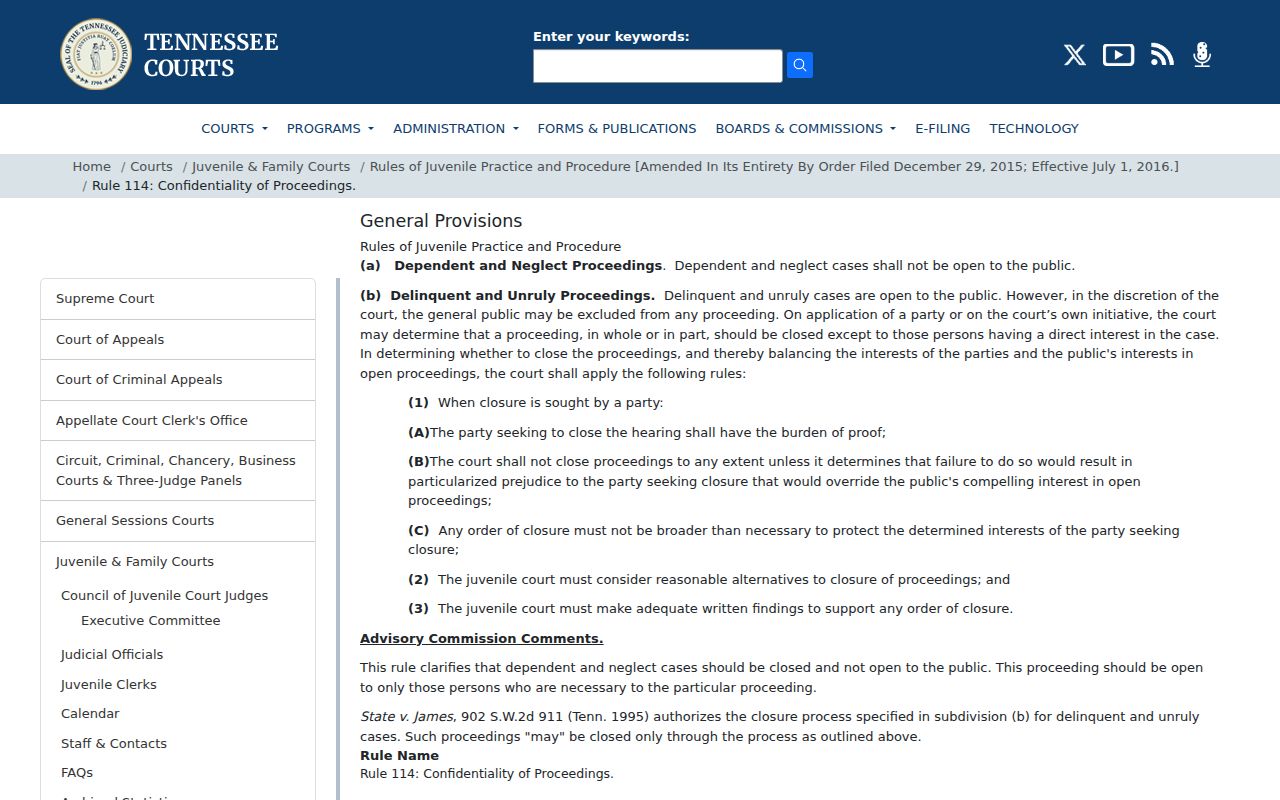
Juvenile cases in Lauderdale County skip the usual adult path. The records sit behind strict confidentiality rules. Tennessee Rule 114 governs dependent, neglect, delinquency, and unruly proceedings. Probate/Juvenile Court decides what may be released and who may ask. The Tennessee Rule 114 page spells out that access guidance.
Do not treat an unavailable juvenile record as an answer about adult court process.